


Pellets are an eco-friendly fuel made from natural sawdust and wood chips without any chemical additives. They offer high energy efficiency, releasing a large amount of heat during combustion. At the same time, pellets are environmentally friendly, producing minimal carbon dioxide and leaving very little ash. Another key advantage is their affordable price compared to other types of fuel. Pellets are convenient to use, require little storage space, and are compatible with most modern boilers. They provide an economical and safe solution for home heating
Pellets
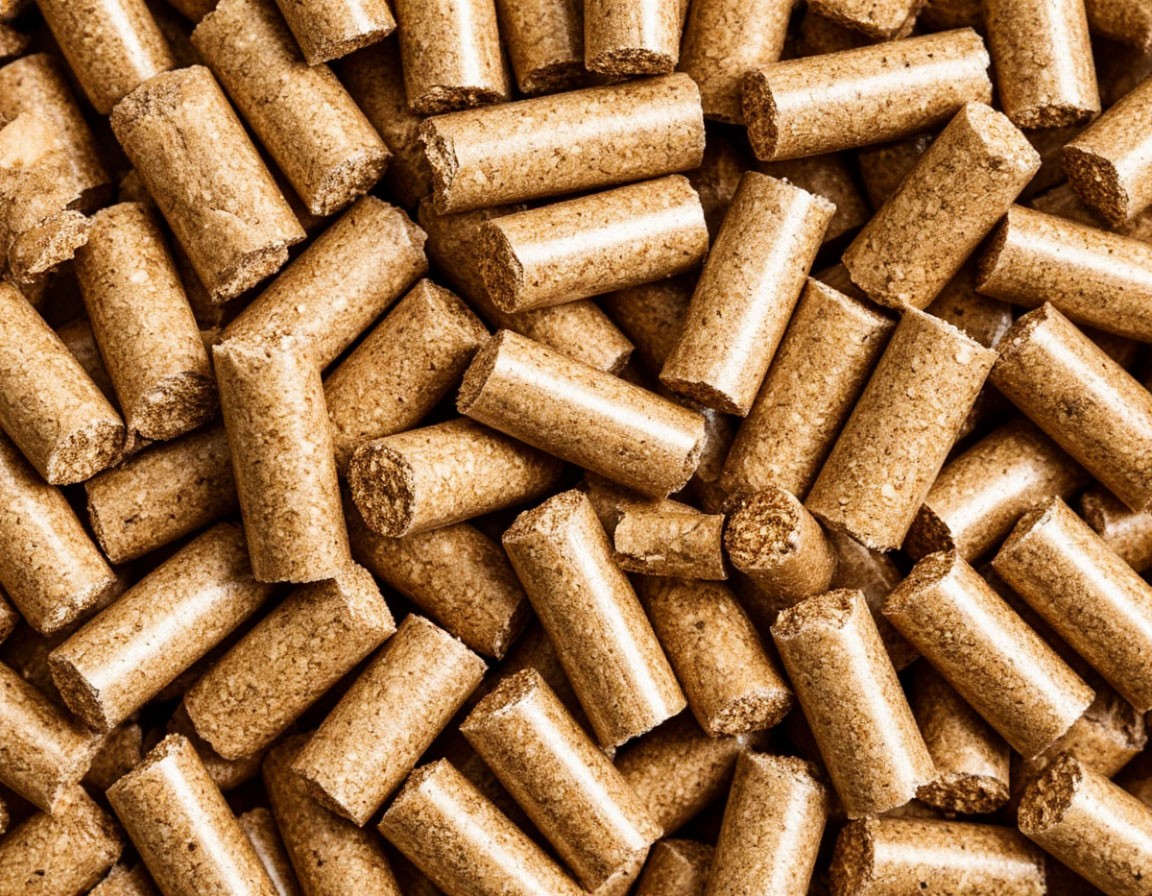
Pellets
- Environmental benefits – made from natural wood waste without chemical additives
- High energy efficiency – heat output higher than firewood or coal
- Low ash content (less than 1%) – minimal residue after combustion
- Cost-Effective – heating costs lower than gas or electricity
- Convenient storage and use – compact pellets, suitable for automatic feeding in boilers
- Home heating – pellet boilers and fireplaces
- Industrial boilers – alternative to gas and coal
- Commercial use – heating warehouses, greenhouses, and farms
- Cooking – specialized ovens for restaurants and camping
- Moisture: ≤ 7%
- Length: 5–40 mm
- Diameter: 6 mm
- Ash Content: ≤ 0.7%
- Calorific Value: 18 GJ/t
- Densiy: 663 kg/m³
Packaging and storage
Delivered in protective packaging (palletized bundles wrapped in stretch film).
Storage Conditions:
-
Dry, well-ventilated space (humidity 40–60%)
-
Temperature: +5°C to +30°C
-
Protected from direct sunlight
Delivery and payment
Our company provides a transparent and convenient purchasing process. We've developed a simple ordering system so that every customer can quickly select the desired product, agree on the details, and receive the goods within the agreed-upon timeframe. Learn about the main stages of the process.
01
Placing an order
You select a product and place an order in a few minutes.
02
Order confirmation
The manager will contact you to clarify details and confirm
03
Payment for the order
Convenient and secure payment methods are offered.
04
Order delivery
The order is delivered quickly and in secure packaging.
Frequently asked questions
01. What Are Pellets and What Are They Made Of?
Pellets are an eco-friendly fuel in the form of granules, produced from wood waste (sawdust, shavings) as well as agricultural crops
02. Why Are Pellets Better Than Firewood or Coal?
Pellets have a high calorific value, produce minimal ash, are easy to store and load, and are considered an environmentally friendly type of fuel
03. Are Pellets Suitable for All Boilers?
For maximum efficiency, pellets are best used in specially designed pellet boilers or burners. However, many modern solid-fuel boilers are also compatible with pellet fuel
04. How Should Pellets Be Stored to Maintain Quality?
Pellets should be stored in a dry, well-ventilated area, away from moisture. For large volumes, it is recommended to use big bags or enclosed storage facilities
05. How to Calculate Pellet Consumption for Home Heating?
On average, heating a 100 m² house for one season requires between 3 and 5 tons of pellets. Exact consumption depends on the building’s insulation, heating mode, and boiler capacity
 Artur Malakhov - director of the department