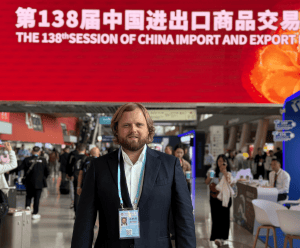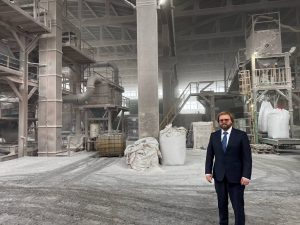


Tranivex at IFA Crossroads Asia-Pacific 2025 (Bangkok)

 20 October 2025
Bangkok, October 2025. The Tranivex team attended IFA Crossroads Asia-Pacific 2025 in Bangkok to meet partners and colleagues, compare notes on current market dynamics, and align on near-term priorities across nitrogen, phosphates, potash, specialty inputs, and sustainable agritech. We held a series of productive discussions with producers, traders, lenders, and technology providers about pricing, supply availability, regulatory shifts, and innovation pipelines.
What we discussed with partners:
• Near-term availability and pricing for DAP/MAP, urea and AS; China’s export windows and policy signals.
• Palm-oil-linked fertilizer demand in Southeast Asia and the cost structure on plantations.
• Financing for farm inputs and value chains in Frontier Asia; what lenders will fund in 2025–2027.
• Practical pathways to greener inputs: inhibitors, coatings, biodegradable CRF, and digital agronomy.
Market highlights we’re watching:
• Phosphates: After a prolonged rally, DAP/MAP prices plateaued in Q3-2025, but affordability remains the worst since 2009 and global supply stays tight—with Chinese export policy still the key swing factor through 2029. Non-Chinese producer margins remain elevated.
• China & farm input affordability: China keeps domestic fertilizer prices below global levels; urea and ammonium sulfate exports move within restricted windows. Yield gaps and cost structure differences vs. the US remain a central driver of $/t economics.
• Regional demand baselines: Asia Pacific accounts for roughly half of global fertilizer demand, and over half of global nitrogen use benefits from some form of farmer support (subsidies/controls)—a critical variable for 2026 budgets.
• India outlook: With population rising and grain demand projected at ~400 Mt by 2050, nutrient requirements are set to grow; India remains the largest fertilizer importer, with substantial urea/DAP inflows and high subsidy outlays to support farm economics.
• Palm oil & SE Asia fertilizer demand: Indonesia’s biodiesel program consumes over half of domestic palm oil, reducing exportable surplus; palm oil has at times traded at a premium to other veg oils. Fertilizer and labor are the two largest plantation costs, keeping input efficiency in focus.
• Innovation tracks (industry): Field results highlighted zinc-coated urea and multi-nutrient foliar products (+12–20% yield in trials), plus “climate-smart” NPK designs and digitized precision application—pointing to a gradual shift from commodity to sustainable/specialty fertilizers toward 2050.
• Biodegradable CRF coatings: New materials and processes aim to deliver controlled release without microplastics and to comply with the EU’s phase-out of non-biodegradable CRF coatings from October 2028; vendors showed >150-day longevity and coating performance suited to fluid-bed processes.
• Financing & policy: ADB signaled expanded food-systems support to $40 bn (2022–2030) and growth in climate finance share—relevant to projects that link input efficiency, resilience, and emissions outcomes.
• IFA data & sulfur research: Forthcoming FAOSTAT Cropland Nutrient Balance (1961–2023) adds NPK removal with residues, and a new global crop sulfur balance project (2025–2027) will quantify S limitations—useful for market and product positioning.
Our takeaways
1. Supply remains policy-sensitive: Particularly for phosphates; planning needs conservative lead times and diversified origins.
2. APAC demand is subsidy-anchored: Budget cycles and affordability programs will shape volumes more than price alone.
3. Efficiency is ROI-critical: Plantation and row-crop economics keep pushing toward EEFs, inhibitors, and smarter delivery (including coatings and foliar).
4. Financing is available for impact: Projects that document input efficiency, yield stability, and lower GHG profiles are better positioned to access blended and climate-linked capital.