


Bituminous coal is a sedimentary rock formed from plant remains under pressure and temperature over millions of years. It is characterized by a high carbon content (60–95%), which provides high calorific value — up to 25–30 MJ/kg. It is widely used in power generation, industry, residential heating, and metallurgy (coke production)
Bituminous coal
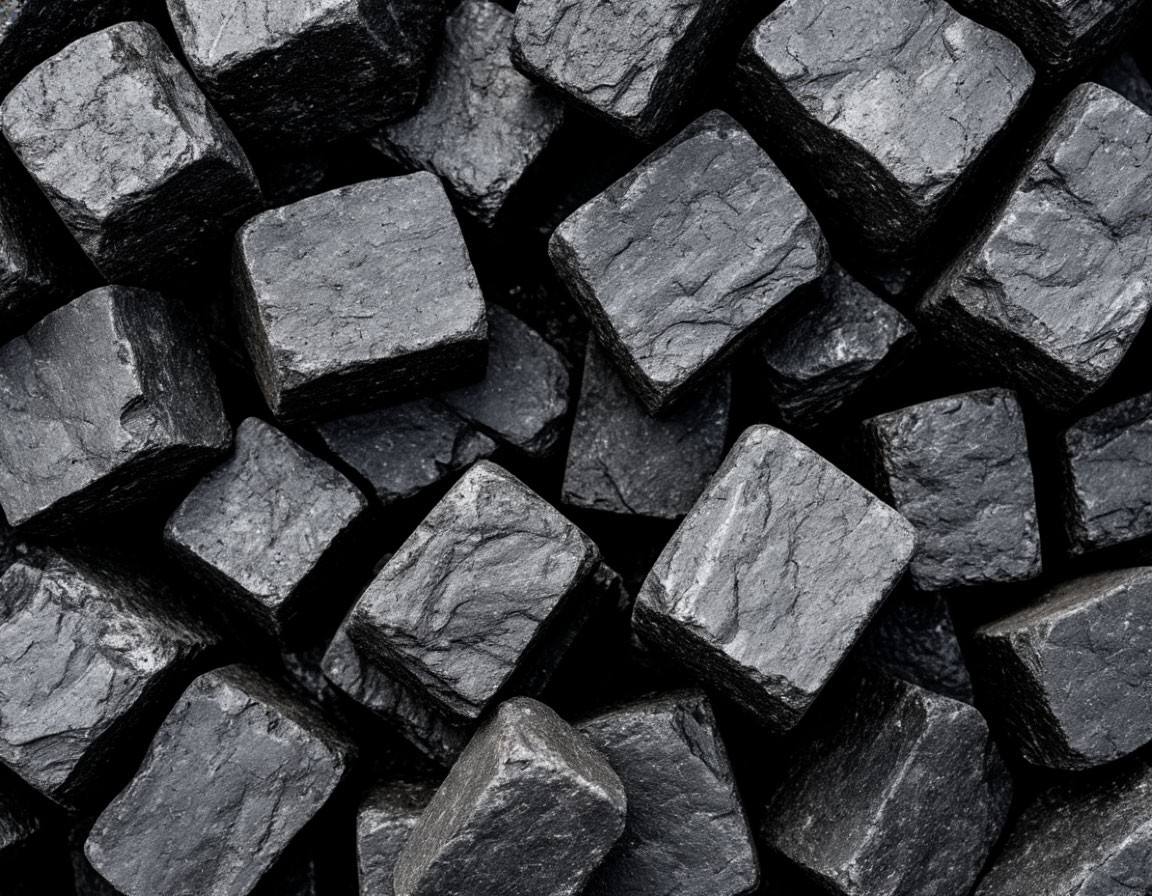
Bituminous coal
- High calorific value — efficiently generates heat and energy
- Long combustion time — requires fewer fuel reloads
- Availability and cost-effectiveness — lower price compared to gas and liquid fuels
- Variety of grades — suitable for applications ranging from domestic heating to industrial use
- Long-term storage — retains quality under proper storage conditions
- Power generation — electricity production at thermal power plants
- Metallurgy — coking for iron and steel production
- Industrial processes — cement, lime, and brick manufacturing
- Residential and utility heating — boilers, furnaces, and solid-fuel systems
- Chemical industry — production of coal-chemical products
- Color: predominantly black or dark gray, sometimes with brownish or greenish shades
- Structure: dense and compact, occasionally friable or layered
- Hardness: medium to high, depending on the degree of metamorphism
- Calorific value: high — 20 to 40 MJ/kg
- Moisture content: 1–15%, depending on storage and environmental conditions
- Ash content: 5–45%, influenced by mineral inclusions and metamorphism level
- Volatile matter: 8–50%, depending on coal age and formation conditions
Sulfur content: low (≤1%) to high (up to 4%), affecting environmental performance and usage options
Packaging and storage
Packaging:
-
Supplied in bulk, ensuring convenient loading, transportation, and unloading — optimal for large industrial consumers, thermal power plants, and boiler facilities.
Storage Conditions:
-
Store in covered or open storage areas with protection from precipitation
-
Provide drainage to prevent excessive moisture
-
Ensure ventilation to avoid self-heating and spontaneous combustion
-
Keep away from sparks and open flames
-
For long-term storage, monitor internal coal mass temperature regularly
Delivery and payment
Our company provides a transparent and convenient purchasing process. We've developed a simple ordering system so that every customer can quickly select the desired product, agree on the details, and receive the goods within the agreed-upon timeframe. Learn about the main stages of the process.
01
Placing an order
You select a product and place an order in a few minutes.
02
Order confirmation
The manager will contact you to clarify details and confirm
03
Payment for the order
Convenient and secure payment methods are offered.
04
Order delivery
The order is delivered quickly and in secure packaging.
Frequently Asked Questions
01. Where Is Bituminous Coal Used?
Bituminous coal is widely used in the energy sector for electricity generation, in metallurgy (coking), and in industry as fuel and a raw material for chemical processes
02. What Is the Calorific Value of Coal?
Bituminous coal has an average calorific value of 5,500–7,500 kcal/kg, while lignite (brown coal) ranges from 3,000–4,500 kcal/kg, making bituminous coal more energy-efficient
03. How Should Coal Be Stored?
Coal should be stored in a dry, well-ventilated area, protected from precipitation. It is especially important to keep lignite dry, as it compacts and loses calorific value more quickly
04. How Environmentally Friendly Is Coal?
Coal combustion releases carbon dioxide and ash. To reduce environmental impact, modern filters and flue gas cleaning technologies are used. Bituminous coal is considered more environmentally friendly than lignite due to its lower moisture and impurity content
05. What Is Lignite Used For?
Lignite is used in energy production, municipal services, heating homes and enterprises, and as a raw material in the chemical industry
Other products
 Artur Malakhov - director of the department